what can the oncology nurse do to minimize the exposure risk to chemotherapeutic agents?
US Pharm. 2014;39(8)(Pharm&Tech suppl):4-seven.
Healthcare workers are being exposed to hazardous drugs during preparation and administration of chemotherapy. This has been an ongoing concern for years in the healthcare industry. Diverse studies showing contamination in the preparation area, long-term chromosomal abnormalities, biologic marker changes in workers, long-term effects on reproduction, pilus loss, rashes, miscarriages, birth defects, and cancers due to chemotherapy exposure brand this concern legitimate.ane At that place are guidelines for safe treatment of both IV and oral chemotherapy from the American Order of Wellness-System Pharmacists (ASHP), the Oncology Nursing Order (ONS), and the Occupational Safety and Health Administration (OSHA), all of which discuss how to ready, handle, and administer chemotherapy safely.i-three
IV Chemotherapy
The National Institute for Occupational Safe and Health (NIOSH) guidelines for Four chemotherapy were updated in 2004 (safety handling of hazardous drugs guidelines have been promoted since the mid-1980s).four The update included the utilise of closed-organization transfer devices (CSTDs) based on various studies, which showed chromosomal abnormalities and cancers developing in workers years subsequently exposure. This change was made every bit a event of many studies that were conducted and revealed a need for a CSTD.
One study funded by NIOSH looked at pharmacy and nursing personnel to provide more than evidence for the risks healthcare workers face up when preparing, administering, dispensing, and/or transporting chemotherapy.v One of the purposes of the study was to investigate specific chromosomal changes that occur in healthcare workers and their level of the exposure. It was found that chemist's staff had twice equally many chromosomal abnormalities as nursing staff, equally pharmacists take much more exposure. The most common chemotherapy agents healthcare workers were exposed to were alkylating agents, with the most frequent chromosomal abnormalities occurring in chromosomes 5 and 7, which are associated with myelodysplastic syndromes (MDS) and acute myeloid leukemia (AML). The outcome of this study showed that facilities should maintain proper clean rooms, pass-through hatches, and personal protective equipment, and should utilize CSTDs.v
Some other cross-sectional study looked at chemist's and nursing personnel over a half dozen-week catamenia to certificate exposure to chemotherapy by analysis of urine and blood samples.6 Comparing exposed and unexposed workers, researchers found that cyclophosphamide and five-fluorouracil were the most commonly detected drugs in the urine and blood samples of healthcare workers. This study concluded that although facilities follow recommendations of safe-handling practices, healthcare workers are notwithstanding not protected and end up with contamination by antineoplastic drugs.6 This only confirms and supports the need for a CSTD.
Office of CSTDs: Although CSTDs do non guarantee 100% protection, they provide significantly more than of it than without them. Many studies accept been washed to evaluate the use of a CSTD. These studies include assessing fluid and vapor leakage during preparation and assistants, the impact of CSTDs on environmental contamination and personnel exposure, and the impact of CSTDs on workflow and staffing.i A airtight organisation is divers by NIOSH as "a device that does not substitution unfiltered air or contaminants with the adjacent environment for the use in compounding and administering sterile doses of chemotherapy and other hazardous drugs" and "a drug transfer device that mechanically prohibits the transfer of environmental contaminants into the system and the escape of hazardous drugs or vapor concentrations outside the system."1,3
A certified CSTD should exist able to perform standard functions needed to make chemotherapy, such equally injecting and disengaging the syringe from the vial through the closed septum and the bag, spiking the pocketbook and priming the IV ready, and transferring by such means as disengaging secondary sets from the main set or administering an IV push dose from a syringe into a Y-site.1 There are several FDA-canonical CSTDs available in the United States: ChemoClave (ICU Medical), BD PhaSeal CSTD (Becton, Dickinson and Visitor), OnGuard (B. Braun Medical), and EquaShield CSTD (EquaShield Medical).ane,iv
When an institution is selecting a CSTD, several factors should be considered: ease of use, cost, condom and efficacy data, preparation modules, and condolement level of pharmacists, physicians, and nurses. In addition to using CSTDs, all personnel should follow current handling guidelines, which country that when preparing chancy drugs, they should article of clothing and use a long-sleeved, distinctively colored gown with airtight cuffs, a closed-front end hood in a biological safety cabinet (BSC) with vertical flow, gloves with a distinctive color put over long sleeves (change every 30 minutes), and center protection if splashing is possible.4 Ane report conducted in U.Due south. hospital pharmacies showed that preparing chemotherapy with a CSTD resulted in significantly reduced levels of contamination by certain chemotherapy agents.4
When an employee is being trained for use of any CSTD, he or she should be observed extremely closely, as consistency and proper use are highly necessary for chemotherapy. Physicians and especially nursing personnel are besides very closely involved with administering chemotherapy and need to be properly trained.7 In decision, the use of a CSTD in conjunction with personal protective equipment has been proven to increase safety levels when preparing, transporting, administering, and disposing of chancy drugs.4
Oral Chemotherapy
The use of oral chemotherapy has risen, accounting for 25% of new chemotherapy agents. This increase in prevalence has forced healthcare workers, peculiarly pharmacists, to acquire more about the safe treatment of these agents. Handling of oral chemotherapy can affect all types of pharmacies, whether retail, infirmary, or specialty, and even a physician'due south office. Oral chemotherapy can have just as many effects on healthcare workers for long-term exposure equally Four chemotherapy, but most people practice not realize it. Unfortunately, this has been a challenge, since there are no well-established guidelines on handling oral chemotherapy equally at that place are for Iv chemotherapy agents because they are notwithstanding evolving, and similar precautions need to exist taken.7 The general misconception is that since oral chemotherapy provides ease of administration, the exposure take a chance is depression and the necessary precautions are minimal.8
There are potentially harmful risks from treatment oral chemotherapy just every bit there are for IV chemotherapy. Chemotherapy agents often accept a narrow therapeutic index (NTI) and are frequently given in combination, which increases adverse effects and exposure risks.seven,eight Some of these effects can exist small, such as headache, dizziness, mucosal sores, contact dermatitis, minor pilus loss, and tissue injury; but others tin be more astringent and long-term, such equally infertility, miscarriage, leukemia, and congenital malformations.8
Exposure to chemotherapy can occur at whatever signal—during transporting, packaging, administering, dispensing, unpacking, or disposal. When oral chemotherapy agents are stored, they should have their own designated area in the pharmacy, and special instructions should be followed if necessary (e.g., protect from calorie-free).viii Some of the risks of exposure to oral chemotherapy for healthcare workers depend on the formulation of the medication (i.e., uncoated vs. coated tablets). Uncoated tablets tin can pose a risk of exposure via inhalation or contact with the skin. Coated tablets may offering less of a chance since they cannot be crushed or split. When handling oral chemotherapy, ever do so advisedly whatever the type of chemist's shop; the same applies if it takes place at a patient's habitation.
All patients should exist advised by pharmacists to handle oral chemotherapy agents with protective equipment. Healthcare workers should always wear two pairs of gloves approved past the American Society for Testing and Materials International (ASTM)—not all gloves are ASTM-canonical. The same handwashing procedures used with 4 chemotherapy should exist followed (i.e., wash hands before putting on and after taking off the gloves).
A written report by Fransman et al was conducted to make up one's mind the potential dermal exposure to oral cyclophosphamide in a infirmary.9-11 It was institute that there was pregnant contamination on and around the toilet.
If a healthcare worker needs to count, shell, or break an oral chemotherapy tablet or sheathing, so a divide counting tray labeled "For chemotherapy employ only" should be used (this may be substituted for a BSC since not all retail and specialty pharmacies may take 1 of these). Such trays should be cleaned using sterile water and gauze and a chemotherapy-rated detergent. This should be followed with a sodium hypochlorite solution and a neutralizer and another rinse. Whatsoever materials used to wipe the trays should be discarded and disposed of into a proper contamination waste bucket. Oral chemotherapy agents should never be placed in an automated dispensing machine or robot as this can compromise the integrity of the medication by accidentally crushing or cutting the dose. The damage would exist all-encompassing, as it would require that the auto be cleaned thoroughly and pose a take a chance to any healthcare workers who were exposed to the medication in the procedure or could cause cross-contamination with other medications.
All healthcare workers should be trained and attend some type of orientation for condom handling of oral chemotherapy.seven,viii The pharmacist should counsel patients and their family members on proper handling of the chemotherapy medication, equally this is an of import duty and an opportunity for intervention. When labeling oral chemotherapy agents, pharmacists should avoid using vague directions such every bit "Use as directed," and the exact count of medications with the showtime and terminate date should be provided to the patient. Pharmacists should counsel patients to not go out their medication in an open up surface area nigh h2o or sunlight and not to discard drugs downward the toilet or in the garbage.8,12 TABLES one and 2 listing specific recommendations for patients and their caregivers and are important guides to keep posted in the work surface area.8
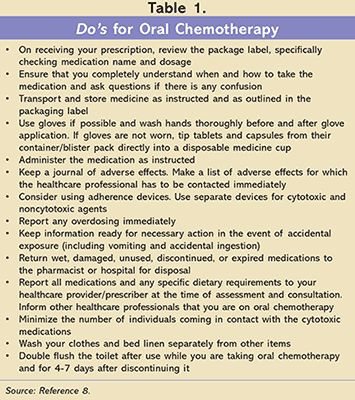
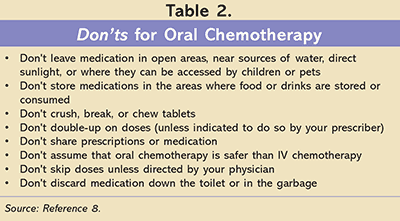
Summary and Decision
In a March 2011 editorial in the Journal of Oncology Chemist's shop Do, the authors concluded that "if the different closed systems currently available are every bit effective, then the pick comes downwards to cost and ease of use."13 CSTDs are an almanac expense, merely the expense is outweighed by the upstanding responsibility to protect the employees. While these systems provide an enhanced level of protection and mitigate the risk, engineering is still evolving, and no commercially available CSTD at this fourth dimension can merits 100% emptying of exposure to hazardous drugs. The reduction in exposure observed with CSTDs does not replace the need for good compounding procedures and proper cleaning.
Both Iv and oral chemotherapy have special precautions that must be taken when preparing, administering, or dispensing these agents for the safety of patients and healthcare providers. It is essential to fairly railroad train employees and assess their knowledge and condolement in the proper utilize of CSTDs. In 2004, NIOSH issued an alarm stating, "Evidence documents a decrease in drug contaminants within a Form II BSC when a CSTD is used and concluded that facilities should consider using devices such every bit CSTDs, glovebags, and needle-less systems when transferring hazardous drugs from the master packaging (such as vials) to dosing equipment (such equally infusion bags, bottles, or pumps)."1-three Various studies take shown abnormalities in chromosomes 5 and vii in healthcare workers—the same abnormalities found in cancer patients.14
In the past decade, the use of oral chemotherapeutic agents for the treatment of cancers has significantly increased. Oral chemotherapy is associated with many advantages, including ease of use and convenience for patients, a reduction in both time and costs associated with traveling to hospitals for Iv chemotherapy infusions, and possible improvements in the quality of life of patients taking oral chemotherapy (as opposed to Four formulations).
While there are definite advantages to oral chemotherapy, many patients accept the misconception that outpatient oral therapy is safer than inpatient Four therapy. Chemotherapeutic agents, regardless of formulation, are medications with NTIs. This only implies that even a minuscule increase or decrease in the dose could be potentially hazardous to the patient. Additionally, chemotherapeutic agents are cytotoxic, meaning that when individuals who do not have cancer are exposed to these drugs, they are at a high hazard for developing adverse events (including cancer itself) due to the cell-destroying properties of the chemotherapy. Because many chemotherapy regimens employ the use of oral agents, it is essential that patients, caretakers, and healthcare providers be educated on how to safely handle these medications to optimize therapy for the patient and reduce risk to all others who come into contact with these drugs.8-10
REFERENCES
1. Power LA. Closed-system transfer devices for safe handling of injectable hazardous drugs. Pharm Pract News. June 2013; i-16. www.pharmacypracticenews.com/download/CSTD_ppn0613_WM.pdf. Accessed July two, 2014.
2. ASHP guidelines on handling hazardous drugs. Drug Distribution and Control: Grooming and Treatment–Guidelines. 2004;95-114. www.ashp.org/doclibrary/bestpractices/prepgdlhazdrugs.aspx. Accessed July 2, 2014.
3. Neuss MN, Polovich Thousand, McNiff K, et al. 2013 updated American Social club of Clinical Oncology/Oncology Nursing Society chemotherapy admin-istration safety standards including standards for the safe administration and management of oral chemotherapy. J Oncol Pract. 2013;nine(2 suppl):5s-13s.
4. Kelly J. The role of closed system transfer devices in mitigating the risks posed to healthcare workers in the treatment of hazardous drugs. Entropy Research. March 2011; 1-12. http://bit.ly/U4AhXO. Accessed July 2, 2014.
five. Clark C. Exposure risks with cytotoxic drugs. Hosp Pharm Eur. 2010;49:fifteen-16.
6. Connor Th, DeBord DG, Pretty JR, et al. Evaluation of antineoplastic drug exposure of health care workers at three academy-based US cancer centers. J Occup Environ Med. 2010;52(ten):1019-1027.
vii. Special PP&P buyers guide: closed organization transfer devices. Pharm Purchasing Prod. 2009;6(5):29-31.
viii. Goodin Southward, Griffith Due north, Chen B, et al. Safety handling of oral chemotherapeutic agents in clinical practice: recommendations from an international pharmacy console. J Oncol Pract. 2011;7(1):vii-12.
9. Cuellar Southward. Safe handling of oral anti-cancer therapy—don't ask don't touch. Illinois Council of Health-Systems Pharmacists Jump Meeting; March nine, 2012. http://bit.ly/1xi6QR4. Accessed July two, 2014.
10. Option A. Home care of the oncology patient: the chemist's role in the patient management and condom handling of oral chemotherapy. Power-Pak C.E. May one, 2012. http://bit.ly/Ve7fGr. Accessed July 2, 2014.
11. Fransman W, Vermeulen R, Kromhout H. Occupational dermal exposure to cyclophosphamide in Dutch hospitals: a pilot study. Ann Occup Hyg. 2004;48(three):237-244.
12. Carey TE. Prophylactic management of oral chemo-therapy drugs. Pharm Purchasing Prod. 2014;11(iii):40-42.
13. Davis J, McLauchlan R, Connor Thursday. Exposure to chancy drugs in healthcare: an issue that volition non become away. J Oncol Pharm Pract. 2011;17(ane):9-13.14. McDiarmid MA, Oliver MS, Roth TS, et al. Chromosome five and 7 abnormalities in oncology personnel handling anticancer drugs. J Occup Environ Med. 2010;52(ten):1028-1034.
To comment on this article, contact rdavidson@uspharmacist.com.
Source: https://www.uspharmacist.com/article/safe-handling-of-chemotherapy-for-pharmacists
0 Response to "what can the oncology nurse do to minimize the exposure risk to chemotherapeutic agents?"
Post a Comment